Showing posts with label Leveson Inquiry. Show all posts

Tuesday, 24 January 2012

Politicians deliberately withhold information from the public.


Politicians deliberately withhold information from the public by obstructing the work of journalists, the Leveson Inquiry has been told.
John Kampfner, chief executive of Index on Censorship, which champions freedom of expression, said there is "a determination" in the corridors of power to keep ordinary people in the dark.
The former journalist, who has worked for titles including the Daily Telegraph, Financial Times and the New Statesman, said there was a "very secretive Whitehall mindset".
Lord Leveson is chairing an inquiry into the culture,
practices and ethics of the British press
He said: "There's a suspicion, invariably, of information and ... there's a determination to keep as much information out of the public domain as possible."
He said parliament had "rolled over" on the issue of superinjunctions but it did not do enough for freedom of expression. "The record of Parliament in implementing a force towards better accountability and better transparency is very poor indeed," he said.
Recalling an incident in his time as chief political correspondent for the Financial Times, he said he refused to be "fed stories" by a spin doctor, whom he did not name. The man said: "Take it down if you want more from where this came in the future." There was "a culture of complacency and duplicity", he said.
Mr Kampfner was giving evidence alongside Jonathan Heawood, director of English PEN, which campaigns for writers and journalists. The pair were asked by Robert Jay QC, counsel to the inquiry, about the balance between Article 8 of the European Convention on Human Rights, the right to privacy, and Article 10, the right of expression.
Mr Heawood said: "I think ultimately those are both right. This is not simply about one right trumping another."
John Kampfner, chief executive of Index on Censorship
Mr Kampfner said Index on Censorship believes the right to freedom of expression can outweigh privacy. "I think I would take a more emphatic position," he said. "We, as an organisation representing freedom of expression in the UK and around the world, do regard Article 10 rights as fundamental to democracy."
He said there are some examples where the right to freedom of expression are necessarily restricted. "But where there are competing rights, Article 8 rights, as determined by judges ... will come up against those competing rights, but we do start from a straightforward Article 10 position."

©Press Association

Tuesday, 17 January 2012

Politicians and police to blame for hacking - Hislop


LONDON (Reuters) - A respected editor laid the blame for the country's phone-hacking scandal at the door of politicians and police on Tuesday, and said journalists did not need new rules but merely to observe existing ones.
Ian Hislop, editor of the satirical and investigative Private Eye magazine told a government-ordered inquiry into press standards that legislation was not needed because many of the tricks exposed by the hacking scandal were already illegal.
Hislop was appearing at the Leveson inquiry along with editors from the Times, Sunday Times and Guardian to urge the presiding judge to protect the country's cherished free press and show caution when considering new legislation.
"Most of the heinous crimes that came up and have made such a splash in front of this inquiry have already been illegal," he said. "Contempt of court is illegal, phone-tapping is illegal, policemen taking money is illegal. All of these things don't need a code, we already have laws for them.
"The fact that these laws were not rigorously enforced is again due to the failure of the police, the interaction of the police and News International -- and let's be honest about this, the fact that our politicians have been very, very involved in ways that I think are not sensible with senior News International people."
Ian Hislop blamed the police and politicians for the phone hacking scandal.
The Leveson Inquiry was ordered by Prime Minister David Cameron last year at the height of the phone-hacking scandal at the News of the World that prompted Rupert Murdoch's News Corp. to close the best-selling Sunday tabloid.
The scandal, which dominated the news agenda for weeks last year, drew attention to the level of influence held by editors and executives at News International, the British newspaper arm of News Corp, and other newspapers in the country.
It embarrassed politicians for their close ties with newspaper executives and also the police, who repeatedly failed to investigate allegations of illegal phone hacking at the News of the World.
Hislop said the conduct of the politicians, who socialised with newspaper executives and employed former editors, gave the impression to many that the industry was untouchable.
"If the prime minister appoints an ex-News of the World editor to be his communications director, you must think 'we're top of the pile, what could stop us?'" he suggested, adding that the current and former prime ministers should appear before the inquiry to explain their conduct.
Tom Mockridge, the head of News International who took over when a host of Murdoch executives departed last year, also urged the inquiry to protect the independent nature of Britain's press regulation, which he said was respected around the world.
"In this society, where there is not a constitutional guarantee of free speech, for the government to make laws which intervene in the press would contravene that basic principle and undermine the principle of a free press," he said.
He added that he had tightened the rules and governance at the company's newspapers since arriving last year.
Judge Leveson is using the lengthy investigation to consider new rules for the country's press which could range from statutory regulation to the more lenient and current system of self-regulation.
Most journalists and executives appearing before the inquiry have accepted that the current rules need to be changed to give more credibility and power to the body that oversees the industry.
All have been opposed to a system where the government regulates the press or has any control over its output.
"I think if the state regulates the press, the press no longer regulates the state," Hislop said.

(Reporting by Kate Holton; Editing by Steve Addison)
©Reuters

Hislop addresses Leveson Inquiry


Private Eye editor Ian Hislop will give evidence to the Leveson Inquiry into press standards.
Mr Hislop, who has been at the helm of the fortnightly satirical magazine for 25 years, has also been a long-running panellist on BBC current affairs quiz Have I Got News For You.
Other witnesses due to address the hearing include Guardian editor Alan Rusbridger, Times editor James Harding and Sunday Times editor John Witherow.
Tom Mockridge, who succeeded Rebekah Brooks as News International chief executive after the phone hacking scandal broke last year, will also give evidence.
Ian Hislop, Editor of Private eye will give evidence
to the Leveson Inquiry today
On Monday the editors of the Daily Mirror and the Sunday Mirror conceded that phone hacking might have occurred at their newspapers too.
Richard Wallace, who has edited the Daily Mirror since 2004, said the practice may have taken place in the newsroom without his knowledge. And Sunday Mirror editor Tina Weaver told the hearing she was not aware of phone hacking at her newspaper but there was no guarantee that it had not occurred.
But Sly Bailey, the chief executive of Trinity Mirror, which runs five national titles and more than 140 regional newspapers, said she was unaware of hacking at any of her papers and that she promoted ethics as a "general source of business".
Prime Minister David Cameron set up the Leveson Inquiry last July in response to revelations that the News of the World commissioned a private detective to hack murdered schoolgirl Milly Dowler's phone after she disappeared in 2002.
The first part of the inquiry, sitting at the Royal Courts of Justice in London, is looking at the culture, practices and ethics of the press in general and is due to produce a report by September.
The second part, examining the extent of unlawful activities by journalists, will not begin until detectives have completed their investigation into alleged phone hacking and corrupt payments to police, and any prosecutions have been concluded.

©Press Association 2012

Thursday, 12 January 2012

Papers 'scapegoated' over Madeleine

The owner of the Daily Express and Daily Star has said that his newspapers were "scapegoated" for their coverage of Madeleine McCann's disappearance.
Richard Desmond criticised the PCC over the McCann coverage when he gave evidence to the Leveson Inquiry
Richard Desmond told the Leveson Inquiry that his titles were "the only honest ones and straightforward ones" for the way they printed a front-page apology to the missing girl's parents and paid them £550,000 in a libel settlement.

He hit out at a former head of the Press Complaints Commission (PCC) for criticising Daily Express editor Peter Hill over the paper's reporting of the case in more than 100 articles.
"Every paper was doing the same thing, which is why every paper or most papers paid money to the McCanns. Only we were scapegoated by the ex-chairman of the PCC," he said.
Mr Desmond, who bought Express Newspapers in 2000, apologised to Kate and Gerry McCann, adding: "Nothing would give me greater pleasure than to find Madeleine."
He told the inquiry into press standards that other newspapers also printed negative stories about the couple.
"At the end of the day all the others were doing the same, plus or minus, and basically I saw it as we were the only honest ones and straightforward ones," he said.
"We stood up and said 'Yes, we got it wrong, there's the money for the marketing fund, let's try and find McCann, the poor little girl, let's put it on the front page and apologise properly'."
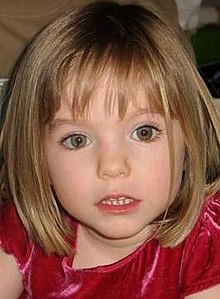
Madeleine McCann disappeared on the evening of Thursday, 3 May 2007.
He added: "Yet the ex-chairman (of the PCC) and his cronies thought 'We'll hang out Peter Hill and the Daily Express'. They should have all stood up and said 'You know what, we've all wronged, let's all bung in £500,000 each'.

"If there were 102 articles on the McCanns, there were 38 bad ones but you could argue there were 65 or 70 good ones."

Tuesday, 10 January 2012

EX-POLICEMAN HELD IN HACKING PROBE


A former Scotland Yard officer was arrested today over allegations of unauthorised leaks to a journalist.
The 52-year-old man is being questioned on suspicion of misconduct in public office after being detained at his Berkshire home by officers from the Independent Police Complaints Commission.
Evidence was sent to the police watchdog from Scotland Yard detectives investigating corruption surrounding the phone-hacking investigation.

The former officer is being questioned by IPCC investigators at a Thames Valley police station.
A spokeswoman for the watchdog said: "A 52-year-old man, a former Metropolitan Police Service officer, was arrested by the IPCC at his home in Berkshire this morning on suspicion of misconduct in public office and Data Protection Act offences.
"The arrest is the result of information passed to the IPCC by the Metropolitan Police Service team investigating Operation Elveden and relates to the alleged passing of unauthorised information to a journalist."
Nine suspects have now been arrested as part of Operation Elveden, which was launched after officers were handed documents suggesting News International journalists had made payments to officers.
Sir Paul Stephenson, the then Met commissioner, said in July that evidence from the publisher suggested a small number of officers were involved.
Last month, a 52-year-old woman, understood to be a member of the force's specialist operations branch, was arrested on suspicion of receiving illegal payments.
Others questioned as part of the inquiry include former News International chief executive Rebekah Brooks, ex-Downing Street communications chief Andy Coulson, former News of the World managing editor Stuart Kuttner, the paper's former royal editor Clive Goodman, and a 63-year-old man whose identity has not been disclosed.
Mrs Brooks and Mr Coulson are both former editors of the News of the World, which was closed in July at the height of the hacking scandal following revelations that murdered teenager Milly Dowler's phone was involved.
The final total of people whose phones were hacked by the News of the World will be about 800, the force believes.
The scandal has led to the closure of the News of the World after 168 years, prompted a major public inquiry, and forced the resignation of Metropolitan Police commissioner Sir Paul and assistant commissioner John Yates.

The officer has never filled a position within the very top ranks at Scotland Yard, a source close to the investigation said.
©Press Association 2012

Monday, 9 January 2012

Murdoch staff defend Sun at hacking inquiry


Current and former editors of Rupert Murdoch's British tabloid The Sun defended the newspaper at the country's phone-hacking inquiry on Monday, saying it could be a "powerful force for good".
Staff at Britain's best-selling newspaper told the Leveson inquiry in London that they had seen no evidence that the The Sun was guilty of the hacking that led to the closure of sister paper the News of the World.
Kelvin MacKenzie -- who as editor from 1981 to 1994 presided over colourful headlines such as "Gotcha", about the sinking of the Argentine warship General Belgrano during the Falklands War -- said the paper had become more cautious.

"Towards the end of my time as editor I was less bullish than I was, perhaps, during the '80s," MacKenzie said.
"The editors (now) are more cautious and were probably right to be cautious."
He admitted some previous mistakes. In 1992, he had told then-prime minister John Major he was going to "throw a bucket full of s(expletive)" over him in the following day's paper after Britain left the European Exchange Rate Mechanism.
And MacKenzie said Murdoch was furious when The Sun had to pay £1 million in the late 1980s in libel damages to singer Elton John, saying that he had received 40 minutes of "non-stop abuse" by telephone from the Australian-born tycoon.
MacKenzie -- whose other most famous headline was "Freddie Starr Ate My Hamster", about a British comedian who put a rodent between two slices of bread and pretended to eat it -- now writes a column for The Sun.
Dominic Mohan, who has edited The Sun since 2009, said the paper could be a "powerful force for good" through its campaigns, support for charities and efforts to explain complex concepts in clear language.

The former showbiz reporter brushed off a comment he made in 2002 about phone-hacking at a rival tabloid, the Daily Mirror.
He said it was a "cheap shot" and a "joke" at the expense of then editor Piers Morgan, who now fronts a talk show on US-based news network CNN and denied phone-hacking when he appeared at the inquiry last month.
Mohan also appealed for a legal "level playing field" between Britain's press and the Internet, saying that over regulation could be a "potentially mortal blow" to an already struggling newspaper industry.
The paper's current royal editor Duncan Larcombe meanwhile told the inquiry, led by senior judge Brian Leveson, that he contacted Buckingham Palace before running any exclusive story on the royal family.
The Sun's showbiz editor Gordon Smart also told the panel that he had no knowledge of phone-hacking being used by the paper, or at the News of the World, where he worked for three months in the previous decade.
Prime Minister David Cameron ordered the inquiry amid a spiralling scandal over the illegal hacking of mobile phone voicemails by the News of the World, Murdoch's British Sunday tabloid, which was shut down in July.
The scandal has also threatened to engulf the The Sun, which has itself faced legal action for alleged phone hacking. It denies the allegations.
A string of people has been arrested over the phone-hacking scandal, including former Sun editor and News International boss Rebekah Brooks, and ex-News of the World editor Andy Coulson, who went on to become Cameron's spokesman.
Brooks' former personal assistant was reportedly arrested last week on suspicion of deleting emails belonging to News International, the British newspaper arm of Murdoch's empire.

Source: ©AFP 2012 & © Yahoo! 2012