Showing posts with label financial crisis. Show all posts

Saturday, 28 January 2012

Greece, creditors on verge of clinching debt deal


Greece and its private creditors said on Saturday they were piecing together the final elements of a debt swap and expected to have a deal ready next week, essential for sealing a new bailout and avoiding an uncontrolled default.

Greece and its private creditors said on Saturday they
were piecing together the final elements of a debt swap and expected to have a deal ready next week
After muddling through round after round of inconclusive talks, the negotiations are in their final phase - though it appeared unlikely that a preliminary deal would be secured in time for a European Union summit on Monday.

Greek bondholders said the two sides were finalising a deal along the lines of a proposal made by Jean-Claude Juncker, the chairman of euro zone finance ministers.

The proposal made by Jean-Claude Juncker,
 the chairman of euro zone 
finance ministers
The bondholders' comments suggested creditors had accepted Juncker's demand for a coupon, or interest rate, of below 4 percent on new, longer-dated bonds that Athens will swap for existing debt.

The coupon had been the main stumbling block in the talks, with euro zoneministers rejecting private creditors' demand for a coupon of at least 4 percent - above the 3.5 percent level Greece and its European partners had been holding out for.

"Next week we will be in a position to complete the debt swap," Finance Minister Evangelos Venizelos said, citing significant progress at Saturday's talks. "We are really one step away from the final deal."

He confirmed that the two sides were working along the "exact framework" provided by euro zone finance ministers.

Charles Dallara, chief of the Institute of International Finance that negotiates on behalf of banks and insurers, is due to leave Athens on Sunday but will remain in contact with Greek authorities, the IIF said.

Still, for Athens, progress on the debt swap is at risk of being overshadowed by increasingly problematic talks with its foreign lenders, whose inspectors are in town demanding unpopular reforms that no politician wants to be linked to.


DENSE, DIFFICULT AND CRUCIAL

Crushed by 350 billion euros of debt and running out of cash quickly, Greece is scrambling to appease the "troika" of its official lenders - the European Commission, European Central Bank and International Monetary Fund - and stitch up a deal with private creditors simultaneously.

Unimpressed with Athens dragging its feet on reforms, the troika has said they could hold up aid if more is not done to make the Greek economy more efficient.

"It's all very dense, difficult and crucial," a Greek finance ministry official said.

The IIF are one of Greece's lenders
European paymaster Germany is pushing for Athens to relinquish control over its budget policy to European institutions as part of discussions over a second rescue package, a European source told Reuters.

With many Greeks blaming Germans for the austerity medicine their country has been forced to swallow, officials in Athens dismissed the idea as out of the question. "The government stresses that this responsibility belongs exclusively to the Greek government," said government spokesman Pantelis Kapsis.

"The government has made a series of steps to improve the effectiveness of the public administration and a closer monitoring of the efforts to achieve fiscal targets.".

The European Commission, the executive arm of the 27-country bloc, said it wanted the Greek government to maintain autonomy.

"The Commission is committed to further reinforcing its monitoring capacity and is currently developing its capacity on the ground," a spokesman said. "But executive tasks must remain the full responsibility of the Greek Government, which is accountable before its citizens and its institutions. That responsibility lies on their shoulders and it must remain so."

A government source in Berlin said Germany's proposal was aimed not just at Greece but also at other struggling euro zone members which receive aid and are unable to make good on their obligations. "All options can obviously be introduced only with the agreement of, for example, the Greeks themselves," he added.


NEW BONDS FOR OLD

The debt swap, in which private creditors take a 50 percent cut in the nominal value of their Greek holdings in exchange for cash and new bonds, is also a prerequisite for the country to secure a 130-billion-euro rescue plan drawn up last year.

The two sides have broadly agreed that new bonds under the swap would have a 30-year maturity, but the talks ran into trouble over the coupon and whether the ECB and other public creditors must take losses on their holdings.

A deal, aimed at chopping 100 billion euros off Greece's debt load, must be sealed in about three weeks at the latest as Greece has to repay 14.5 billion euros of debt on March 20.

Otherwise Greece could sink into an uncontrolled default that might spread turmoil across the euro zone and tip the global economy back into recession.
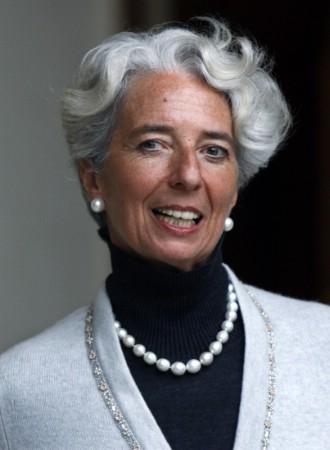
"There is progress"- IMF Managing Director, Christine Lagarde
IMF Managing Director Christine Lagarde said on Saturday that euro zone members were making progress to overcome their crisis but must do more to strengthen their financial firewall to stop the crisis spreading, adding the IMF was ready to help.

"There is progress as we see it," Lagarde told a panel discussion at the World Economic Forum inDavos.

"But it is critical that the euro zone members actually develop a clear, simple, firewall that can operate both to limit the contagion and to provide this sort of act of trust in the euro zone so that the financing needs of that zone can actually be met."

Concern has also grown in recent days that the debt swap may not do enough to get the country's debt reduction plan back on track, and that Greece's European partners will be forced to stump up funds to cover the shortfall.

The German news magazine Der Spiegel reported on Saturday that Greece's international lenders thought Athens would need 145 billion euros of public money from the euro zone for its second bailout, rather than the planned 130 billion euros.

The magazine said the extra money was needed because of the deteriorating economic situation in Greece, echoing a Reuters report on Thursday.

Greece is in its fifth year of recession, and hopes of an end to the crisis in the near term have virtually gone, because of the combination of squabbling politicians, rising social anger and its inability to push through badly needed reforms.


©Reuters 2012

Thursday, 26 January 2012

PM: EU transaction tax plan madness


PM: EU transaction tax plan madness


David Cameron delivered a scathing assessment of Europe's failure to promote economic growth as he urged it to be "bold" to promote business.
The Prime Minister said it was no time for "tinkering" and described European Union plans for a financial transactions tax as "madness". In a speech to the World Economic Forum in Davos, he was strongly critical of what he said were anti-competitive Brussels regulations and the flawed framework for the euro.
"In Britain we are taking bold steps necessary to get our economy back on track, but my argument today is that the need for bold action at European level is equally great," he said. "Europe's lack of competitiveness remains its Achilles heel."
The annual gathering comes amid renewed gloom about the economy after the International Monetary Fund this week downgraded its forecasts for global growth. Britain is facing the prospect of a return to recession after the Office of National Statistics on Wednesday reported a 0.2% contraction in the UK economy in the final quarter of 2011.
Mr Cameron accused the EU, despite the economic challenge, of "doing things to make life even harder". He attacked the "unnecessary " regulations on business that "can destroy jobs" and said the proposed financial transactions tax could cost hundreds of thousands of jobs.
David Cameron described EU plans for a
financial transactions tax as 'madness
"Even to be considering this at a time when we are struggling to get our economies growing is quite simply madness," he said.
The Prime Minister suggested the eurozone had none of the features common to successful currency unions like the US dollar and British sterling.
In a message to his European counterparts, Mr Cameron went on: "This is a time to show the leadership our people are demanding. Tinkering here and there and hoping we'll drift to a solution simply won't cut it any more. This is a time for boldness, not caution. Boldness in what we do nationally - and together as a continent."
But he sought to reassure his European counterparts that, despite vetoing a new EU treaty to deal with the eurozone crisis in December, he wanted Britain to remain within the EU - contrary to the demands of some Tory backbenchers.
He said: "To those who think that not signing the treaty means Britain is somehow walking away from Europe let me tell you, nothing could be further from the truth. Britain is part of the European Union. Not by default but by choice. It fundamentally reflects our national interest to be part of the single market on our doorstep and we have no intention of walking away."

©YahooNews 2012

Monday, 16 January 2012

Chancellor 'confident' on economy


Chancellor George Osborne has insisted the Government was doing everything possible to "weather the storm" as economic forecasters warned the UK is likely to be already in recession.
The Ernst & Young ITEM Club and the Centre for Economics and Business Research both believe that gross domestic product (GDP) shrank in the final quarter of last year and will fall again in the first three months of 2012. A recession is defined as two consecutive quarters of contracting output.
Mr Osborne said the most recent predictions by the Office for Budget Responsibility, which issues official forecasts, showed that Britain would have a negative quarter of growth but not go into recession.
He told BBC Radio 4's Today programme: "That's their forecast, but they were the first to say that it is very uncertain and one of the biggest risks to the British economy is the further deterioration of the eurozone crisis.
The Government is doing everything it can to deal with the economic crisis, Chancellor George Osborne has said
"I said openly at the end of November to the House of Commons when I made my autumn statement that if the eurozone were to go into a deep recession, that would have a real impact on the British economy.

"I'm confident the British Government is doing everything it can with a very difficult inheritance, facing a very difficult international situation to get Britain through this, to weather the storm."
The warnings come shortly after France, the second biggest economy in the eurozone, saw its AAA credit rating downgraded by Standard & Poor's in a move which signals more troubles for the single currency bloc.
Professor Peter Spencer, chief economic adviser to the Ernst & Young ITEM Club, said: "Figures for the last quarter of 2011 and the first quarter of this year are likely to show that we are back in recession and we are going to have to wait until this summer before there are any signs of improvement. But it's not going to be a repeat of 2009 - we are not going to see a serious double dip."
The ITEM Club report forecasts GDP growth of just 0.2% this year before increasing to 1.8% in 2013 and 2.8% in 2014. It said deteriorating levels of confidence will see business investment stagnate in 2012, while export prospects have already slowed.
But the group said UK companies have stronger balance sheets than in 2009 and have built up large cash stockpiles, which will provide a useful insurance policy if the situation deteriorates further.

©Press Association

Friday, 13 January 2012

French credit rating downgrade


Standard Poor's imminent downgrade of eurozone economic giant France's triple-A credit rating has sent stocks sliding and the euro plummeting.

In Brussels, EU government sources told AFP the ratings agency had warned members of the bloc France would be downgraded by one notch, while fellow top-line creditors Germany, Luxembourg and the Netherlands would be spared.


 'The Standard Poor's downgrade (for France) is by one notch,' one of the sources said. The credit rating agency had indicated in December that a cut of two notches could have been applied to the eurozone's second biggest economy.


The downgrade could force France's borrowing costs up at a time when it has already been forced to impose austerity measures to control its deficit, and is a political humiliation for President Nicolas Sarkozy.

Sarkozy faces a tough re-election battle in less than 100 days and reportedly told allies last month: 'If we lose the triple-A, I'm dead.'

France's budget minister and government spokeswoman Valerie Pecresse refused to confirm the imminent downgrade, insisting: 'France is a safe investment.'
But opposition Socialist lawmaker Jean-Marie Le Guen branded the loss of the triple-A 'a triple failure for Sarkozy', amid charges from the left that the president's tax cuts had left France more exposed than its neighbours.


European leaders are due to meet in Brussels on January 29 to nail down details of a fiscal pact designed to reassure bond markets that their deficit reduction plans are on course and their debts safe.
Earlier this week, ratings agency Fitch offered markets reassurance that it did not plan to downgrade France's top triple-A credit rating in 2012, unless the country suffered major economic shocks.

But Standard Poor's still had the eurozone bloc under scrutiny and - while the firm did not confirm it was to act after markets closed on Friday - the reports seemed to have ended the optimism.


France had been on notice that its triple-A debt rating was on the line, amid fears over its large public deficit and its own banks' exposure to even riskier sovereign debt in eurozone partners Greece and Italy.
Earlier on Friday, Italy raised 4.75 billion euros at mostly lower rates in a bond auction, reflecting what was then still improved market confidence and European Central Bank efforts to boost eurozone liquidity.
German Foreign Minister Guido Westerwelle said he would travel to Greece on Sunday for talks on the crisis, taking with him a message of 'encouragement' and 'expectation', Berlin said.


Meanwhile, German Chancellor Angela Merkel's spokesman said she will host the leaders of Portugal, Sweden and Austria next week for informal talks on the eurozone debt crisis and fiscal integration, her spokesman said.
Borrowing by Spain's struggling banks from the European Central Bank hit a 17-month high in December as it offered cheap long-term loans to the eurozone, the Bank of Spain said.

Tuesday, 10 January 2012

RATINGS CUT THREAT TO EURO STATES

Several euro countries, including Italy, could see their credit ratings downgraded by the end of this month as they struggle to cope with too much debt.
Fitch Ratings head of sovereign ratings David Riley said the agency will give its verdict on several countries by the end of January. It currently has Italy, Spain, Belgium, Ireland, Slovenia and Cyprus on so-called "ratings watch negative" and Riley said the reductions could be up to two notches.
Much interest in the markets centres on Italy, the third-largest eurozone economy and considered too expensive to bail out. Mr Riley said it is the "front line" of Europe's debt crisis.
"The future of the euro will be decided at the gates of Rome," he said.
Although Italy has a relatively low budget deficit in comparison to its economy, the country is saddled with massive amounts of debt and will have to raise a large chunk of cash in the markets this year.
It has found itself in financial trouble in recent months, with investors demanding increasingly high interest rates to lend it more money. Former prime minister Silvio Berlusconi was forced to resign late last year as the economic backdrop darkened, making room for a caretaker government under well-respected economist Mario Monti.
Mr Riley said the challenge for Mr Monti's government is to convince investors it has a proper strategy to keep a lid on spending but also that it has a strategy for economic growth. An expanding economy helps keep a country's debt to GDP ratio under control.
Mr Riley said France, the eurozone's second-largest economy, is also facing difficulties because of its debt burden, which is over 80% of GDP, although its cherished triple A rating is not one of those facing an imminent cut by Fitch.
Mr Riley also said that Greece will remain at the heart of the crisis over the coming months as it seeks to negotiate a deal with private creditors on reducing the value their holdings of Greek debt. He said even that deal would fail to materially lighten Greece's debt load, though he was confident Greece would still be a member of the eurozone this time next year.

©Press Association

Monday, 9 January 2012

BRITONS DOWNBEAT IN FINANCES POLL


Only a quarter of Britons (24%) rate their current personal financial situation as strong, compared to almost half of Swedes (47%), an international poll has suggested.
UK financial attitudes were of a similar level to those in Mexico, South Africa and Spain (23%), according to new research from Ipsos's Global @dvisor online survey.
However they were well below those of India (58%), Canada (41%), the United States (38%) and Germany (32%).
People in France displayed a more pessimistic outlook about their personal financial situation (21%), as did those in Hungary (10%), Italy (12%) and Japan (13%).
Britons also appeared fairly downbeat about the prospects of improvement with just one in five (20%) Britons expecting their personal financial situation to be stronger in the next six months, in line with Spain (21%) and Poland (23%).
In contrast 84% in Brazil expressed optimism about their financial future, with Germany on 26%, the United States on 33% and Canada on 34%.
France and Hungary revealed a more gloomy attitude on the next six months with 9% in each country predicting any improvement in their financial situation.
According to the poll, around one in five (18%) Britons said it was likely they, a family member or someone they knew would lose their job in the next six months, in line with France (17%).
A high level of anxiety about job losses was expressed in Hungary and Mexico (34%), in contrast to more confident attitudes in Sweden and Germany (9%), plus Japan (10%).
Simon Atkinson, assistant chief executive of Ipsos MORI, said: "On the economy Brits have been among the gloomiest nations in the world throughout 2011, and this just shows that the concern is also of a personal nature. We are more negative about our financial prospects than our North American cousins but not as bad as the French and Italians."
The survey, conducted at the end of November, was based on an international sample of 18,682 people aged between 16 and 64 across 24 countries.

PA 2012

SIR RICHARD VOWS TO IMPROVE BANKING


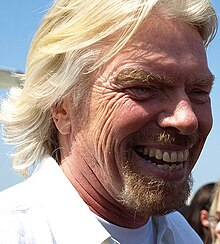
Sir Richard Branson has vowed to improve British banking for customers during his visit to the first newly re-branded branch of Virgin Money.
The tycoon's firm took over nationalised Northern Rock in a £747m deal and he toasted staff and customers in the lender's Newcastle heartland.
Sir Richard was visiting one of Northern Rock's landmark branches in the city's Northumberland Street.
Sir Richard wants to improve banking
The re-branding of Northern Rock's 75 branches across the country is expected to take nine months.

Sir Richard said: "The Virgin Group has always gone into markets where there's been an opportunity to make things better for customers.
"We've been doing it for 40 years, with some real milestone moments along the way, from our first steps in the record industry to launching Virgin Atlantic.
"Now we want to do the same for banking.
"It's not something we take lightly. There's a lot of hard work ahead. But we have the people, the products and the plans in place".

Jayne-Anne Gadhia, chief executive officer at Virgin Money said: "I am delighted to mark the acquisition of Northern Rock and the beginning of our quest to make banking better with all the fantastic people we have working for the combined business."
Sir Richard will spend two days meeting staff starting with a tour of branches in the North East as well as meeting staff in the operational headquarters in Newcastle before moving on to the Virgin Money offices in Edinburgh, Norwich and London.
Virgin Money aims to challenge the banking industry's "big five" and has claimed its range of saving deals will be "simple, fair and transparent".
The brand's local reputation was enhanced on Wednesday when Newcastle United beat Manchester United 3-0 in front of a packed home crowd while wearing the new Virgin Money logo on their black and white shirts for the first time.
After the landmark result, Sir Richard tweeted: "OK, I accept we're jammy bastards!" Newcastle United also won on Saturday with the new logo.
Northern Rock was nationalised and split into "good" and "bad" banks after the disastrous 2007 credit crisis which saw queues of savers line up to withdraw their cash.

PA 2012

Friday, 6 January 2012

LABOUR DISMISSES PARTY SPLIT CLAIMS

Labour dismissed allegations of a split over spending plans today, after senior shadow cabinet minister Jim Murphy said the party needed to show "credibility" by explaining where it would make cuts.
The shadow defence secretary said he accepted £5 billion-worth of the Government's military cuts and acknowledged that Labour would have to make spending reductions if it won power.

Jim Murphy - Labour needs to be "credible"

Tories claimed that his comments, in an interview with The Guardian, amounted to an attack on Labour leader Ed Miliband and shadow chancellor Ed Balls, who have been arguing for a slower rate of reduction in Government spending.
However a source close to Mr Murphy dismissed the claim as "mischief-making", pointing out that Mr Balls himself used a pre-Christmas interview to state explicitly that "there have got to be cuts" and to say that Labour needs to address "public scepticism" about its willingness to take tough decisions on spending.
Mr Murphy was spelling out how that approach applied to defence, said the source.
The shadow defence secretary's remarks come ahead of the launch next month of a Labour review of Britain's defence needs, which is expected to be critical of the 2010 Strategic Defence and Security Review (SDSR).
Mr Murphy told The Guardian: "It is important to be both credible and popular when it comes to defence investment and the economics of defence.
"There is a difference between populism and popularity. Credibility is the bridge away from populism and towards popularity. It is difficult to sustain popularity without genuine credibility.
"At a time on defence when the Government is neither credible nor popular it is compulsory that Labour is both."
Among the cuts accepted by Mr Murphy were the scrapping of the Nimrod MRA4 surveillance aircraft, saving £2 billion; £900 million of efficiencies in the Trident renewal programme; a £350 million rationalisation of the defence estate; cuts of £205 million in civilian allowances; and reductions in tank regiments, saving £35 million.
He said that Labour will also accept the withdrawal of VC-10 transporter and tanker aircraft in 2013 and C-130J Hercules heavy-lift planes from 2022, indicating that the total cuts figure could rise above £5 billion.
"This is a thorough, forensic package which strengthens defence economic credibility and deals comprehensively with the idea that we oppose all cuts," said Mr Murphy.
"The truth is the Labour Party would have to make cuts if we were in power."
However he made clear he continued to oppose key elements of the SDSR, arguing for the replacement of Nimrod's capability and the retention of warplanes able to operate from aircraft carriers.
"The idea that you cannot deploy an aircraft carrier with aeroplanes on it for a decade - whatever way you do the sums, it doesn't add up," he said.
Treasuty Secretary, Chloe Smith say Mr Murphy's comments  were  an "extraordinary attack" on Mr Miliband and Me Balls
Treasury minister Chloe Smith said that the comments by the prominent Blairite - who was joint campaign manager for David Miliband's 2010 leadership campaign - amounted to an "extraordinary attack" on Ed Miliband and Ed Balls.

They followed the warning earlier this week from Labour peer Lord Glasman that the party appears to have "no strategy, no narrative and little energy" under Mr Miliband's leadership, she said.
"After a series of attacks on his weak leadership, this is the latest blow to Ed Miliband as even his own shadow cabinet are losing confidence in Labour's economic policy," said Ms Smith.
"Until Labour say what spending they would cut to clear up their mess, rather than calling for more spending, more borrowing and more debt, they will never be trusted with our economy again."

CAMERON: 2012 A DIFFICULT YEAR

David Cameron warned today of another "testing year" ahead for British households.
The Prime Minister said he hoped inflation would fall this year to ease the pressure and insisted there were positive signs on private sector employment and exports.
But he said he would not "pull the wool over people's eyes" about the difficulties that remained.
"Looking into 2012, one of the trends I hope to see happen is a fall in the level of inflation, so households feel under less pressure than they did in 2011," he told BBC Radio 4's Today programme.
"But undoubtedly - I don't want to pull the wool over people's eyes - it's a difficult year, it's a testing year, but I think we need to meet these challenges with the sense that we can overcome them."
Mr Cameron acknowledged that the Government's attempts to rebalance the economy away from its reliance on public sector spending and financial services was not going as quickly as he had hoped.
"What we need to have in Britain is a rebalancing of the economy, away from Government spending, excessive borrowing, financial services and consumption and towards business investment, export, manufacturing, making things again, right across the country," he said.
"There is a rebalancing taking place, but it's not going as fast as we'd like it to, we need to do better on that front."
He said private sector employment was growing, exports were improving and there was "some reindustrialisation going on".
"There are some positive signs but my general point is that we want the rebalancing to go further and faster and that's what the Government should help focus on," Mr Cameron said.

PM "not satisfied" with bankers' bonuses

Mr Cameron said he was "not satisfied" with the level of bankers' bonuses, saying they were "completely out of whack".
He indicated that further measures to curb bonuses in the City would be unveiled within days.
"People aren't satisfied, I'm not satisfied. We've seen a level of reward at the top that has just not been commensurate with success."
He said the Government would be introducing greater transparency about remuneration and increasing shareholders' power to restrict pay.
"I think those things can make a difference and I will have more to say about that later this week," he said.
"I think the whole bonus culture has got completely out of whack."
But he said there had already been "a massive reduction" in bonus levels compared with three or four years ago.

PA 2012