Showing posts with label greece. Show all posts

Saturday, 28 January 2012

Greece, creditors on verge of clinching debt deal


Greece and its private creditors said on Saturday they were piecing together the final elements of a debt swap and expected to have a deal ready next week, essential for sealing a new bailout and avoiding an uncontrolled default.

Greece and its private creditors said on Saturday they
were piecing together the final elements of a debt swap and expected to have a deal ready next week
After muddling through round after round of inconclusive talks, the negotiations are in their final phase - though it appeared unlikely that a preliminary deal would be secured in time for a European Union summit on Monday.

Greek bondholders said the two sides were finalising a deal along the lines of a proposal made by Jean-Claude Juncker, the chairman of euro zone finance ministers.

The proposal made by Jean-Claude Juncker,
 the chairman of euro zone 
finance ministers
The bondholders' comments suggested creditors had accepted Juncker's demand for a coupon, or interest rate, of below 4 percent on new, longer-dated bonds that Athens will swap for existing debt.

The coupon had been the main stumbling block in the talks, with euro zoneministers rejecting private creditors' demand for a coupon of at least 4 percent - above the 3.5 percent level Greece and its European partners had been holding out for.

"Next week we will be in a position to complete the debt swap," Finance Minister Evangelos Venizelos said, citing significant progress at Saturday's talks. "We are really one step away from the final deal."

He confirmed that the two sides were working along the "exact framework" provided by euro zone finance ministers.

Charles Dallara, chief of the Institute of International Finance that negotiates on behalf of banks and insurers, is due to leave Athens on Sunday but will remain in contact with Greek authorities, the IIF said.

Still, for Athens, progress on the debt swap is at risk of being overshadowed by increasingly problematic talks with its foreign lenders, whose inspectors are in town demanding unpopular reforms that no politician wants to be linked to.


DENSE, DIFFICULT AND CRUCIAL

Crushed by 350 billion euros of debt and running out of cash quickly, Greece is scrambling to appease the "troika" of its official lenders - the European Commission, European Central Bank and International Monetary Fund - and stitch up a deal with private creditors simultaneously.

Unimpressed with Athens dragging its feet on reforms, the troika has said they could hold up aid if more is not done to make the Greek economy more efficient.

"It's all very dense, difficult and crucial," a Greek finance ministry official said.

The IIF are one of Greece's lenders
European paymaster Germany is pushing for Athens to relinquish control over its budget policy to European institutions as part of discussions over a second rescue package, a European source told Reuters.

With many Greeks blaming Germans for the austerity medicine their country has been forced to swallow, officials in Athens dismissed the idea as out of the question. "The government stresses that this responsibility belongs exclusively to the Greek government," said government spokesman Pantelis Kapsis.

"The government has made a series of steps to improve the effectiveness of the public administration and a closer monitoring of the efforts to achieve fiscal targets.".

The European Commission, the executive arm of the 27-country bloc, said it wanted the Greek government to maintain autonomy.

"The Commission is committed to further reinforcing its monitoring capacity and is currently developing its capacity on the ground," a spokesman said. "But executive tasks must remain the full responsibility of the Greek Government, which is accountable before its citizens and its institutions. That responsibility lies on their shoulders and it must remain so."

A government source in Berlin said Germany's proposal was aimed not just at Greece but also at other struggling euro zone members which receive aid and are unable to make good on their obligations. "All options can obviously be introduced only with the agreement of, for example, the Greeks themselves," he added.


NEW BONDS FOR OLD

The debt swap, in which private creditors take a 50 percent cut in the nominal value of their Greek holdings in exchange for cash and new bonds, is also a prerequisite for the country to secure a 130-billion-euro rescue plan drawn up last year.

The two sides have broadly agreed that new bonds under the swap would have a 30-year maturity, but the talks ran into trouble over the coupon and whether the ECB and other public creditors must take losses on their holdings.

A deal, aimed at chopping 100 billion euros off Greece's debt load, must be sealed in about three weeks at the latest as Greece has to repay 14.5 billion euros of debt on March 20.

Otherwise Greece could sink into an uncontrolled default that might spread turmoil across the euro zone and tip the global economy back into recession.
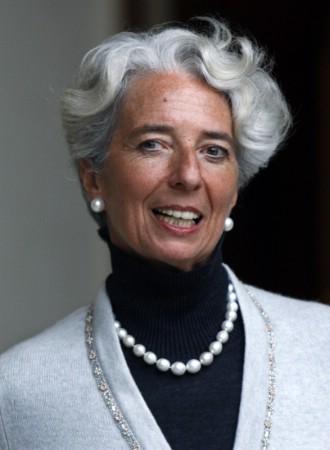
"There is progress"- IMF Managing Director, Christine Lagarde
IMF Managing Director Christine Lagarde said on Saturday that euro zone members were making progress to overcome their crisis but must do more to strengthen their financial firewall to stop the crisis spreading, adding the IMF was ready to help.

"There is progress as we see it," Lagarde told a panel discussion at the World Economic Forum inDavos.

"But it is critical that the euro zone members actually develop a clear, simple, firewall that can operate both to limit the contagion and to provide this sort of act of trust in the euro zone so that the financing needs of that zone can actually be met."

Concern has also grown in recent days that the debt swap may not do enough to get the country's debt reduction plan back on track, and that Greece's European partners will be forced to stump up funds to cover the shortfall.

The German news magazine Der Spiegel reported on Saturday that Greece's international lenders thought Athens would need 145 billion euros of public money from the euro zone for its second bailout, rather than the planned 130 billion euros.

The magazine said the extra money was needed because of the deteriorating economic situation in Greece, echoing a Reuters report on Thursday.

Greece is in its fifth year of recession, and hopes of an end to the crisis in the near term have virtually gone, because of the combination of squabbling politicians, rising social anger and its inability to push through badly needed reforms.


©Reuters 2012

Tuesday, 24 January 2012

IMF Warns Debt-Crisis Inaction May Mean Steep EU Recession


IMF Warns Debt-Crisis Inaction 
May Mean Steep EU Recession.
The global economy is slowing this year, the International Monetary Fund said Tuesday, cutting its forecasts for growth and warning of a deeper downturn if Europe doesn't take stronger action to stem its debt crisis.
The global economy will expand 3.3%, this year, down from 3.8% last year, said the IMF, which in September had forecast 4% growth in 2012.

Europe is likely to experience at least a mild recession this year, but the outcome could be far worse if euro-zone leaders fail to halt the rise of state borrowing costs and growing squeeze on bank credit, the world's emergency lender said in an update of its World Economic Outlook. Inaction could cause the euro-zone economy to shrink by 4% on average in each of the next two years, and lop two percentage points off global output this year, the fund said.
The World Recovery is in danger of stalling - IMF Chief Economist Oliver Blanchard
"The world recovery, which was weak in the first place, is in danger of stalling," IMF chief economist Olivier Blanchard said. "But there is an even greater danger, namely that the European crisis intensifies. In this case, the world could be plunged into another recession," he said.

Funding costs for some of the region's biggest economies are hitting levels not seen since the launch of the European Economic and Monetary Union. Combined with thinning credit in financial markets and governments tightening their fiscal belts, Europe is likely to face at the very least a mild recession this year.

If Europe quickly follows IMF recommendations, the fund expects the euro area to face a 0.5% contraction this year. The fund shaved off 1.6 percentage points from its last forecast for 2012 in September--reflecting its worst-case scenario--after risks escalated sharply in the last quarter of the year, when the debt crisis "entered a perilous new phase." Under its optimistic scenario, the IMF expects growth to return to the region next year.

IMF warn that debt inaction may
result in a steep recession in the EU
Economists increasingly expect Greece to default within weeks. Even more worryingly, the markets are now targeting Spain and Italy, pushing up the cost for Rome and Madrid to borrow to cover the risk of default. The IMF slashed its 2012 forecasts for both countries, saying Italy faces a 2.2% contraction and Spain, a 1.7% fall. Both are expected to continue to be in recession through 2013.

The IMF praised the efforts of many euro-zone members to reduce their massive debt burdens and bloated budgets, but it warned against further near-term cuts that could worsen their economic woes.

"Given the large adjustment already in train this year, governments should avoid responding to any unexpected downturn in growth by further tightening policies," IMF staff said.

Advanced economies, including the U.S., Japan, the U.K and the euro zone, are expected to expand by only 1.5% on average through 2013, a growth rate too sluggish to make a major dent in high unemployment levels.

Growth in emerging and developing economies has slowed as European banks spend less abroad and euro-area demand contracts. The IMF forecasts those countries will expand as a bloc by 5.4% this year and 5.9% next year, shaving more than half a percentage point off their growth estimates. The fund lowered China's growth by nearly a percentage point to 8.2% for the year, down from a previous forecast of 9%.
But major emerging economies face a risk of a major shock to growth. Should real estate and credit markets unwind, "the impact on economic activity could be very damaging," the IMF said.

Overall, the IMF sees global growth slowing but not collapsing, and many advanced economies avoiding a second recession.

The European Stability Fund
"However, this is predicated on the assumption that in the euro area, policy makers intensify efforts to address the crisis," the IMF said.

The IMF wants the euro zone to double the size of its emergency bailout fund, called the European Financial Stability Fund, which it said Tuesday wasn't big enough to address any new major debt emergency. 


The fund said that financing for the bailout fund is in question following its rating downgrade and the higher cost of financing it.

It is also urging the Group of 20 industrial and developing countries to boost the IMF's lending resources to more than $1 trillion. 


That way, Europe could use its bailout fund to help boost banks' cash levels and keep its euro-zone financing costs down while the IMF helps bail out ailing economies. The fund also wants the European Central Bank to continue its bond-buying program, maintain ample credit in the financial system and ease policy interest rates.

However, there are major political hurdles for Europe to follow through on the IMF's recommendations. In particular, Germany has so far resisted bulking up the bailout fund beyond what has already been promised and the ECB has publicly rejected a bailout role.

The IMF also reiterated its concerns that the U.S. and Japan hadn't made enough progress developing a medium-term plan to slim their budgets and pay down massive debt overhangs. In the absence of action, "there is the possibility of turmoil in global bond and currency markets," it said.

-By Ian Talley, Dow Jones Newswires
Edited by PoliticsUK

Greece 'Names And Shames' Top Tax Dodgers


Debt-laden Greece has released a list of 4,000 of the country's biggest tax dodgers as part of a name-and-shame policy to get evaders to pay up.
A famous singer, retired basketball star and former media magnate are among those on the list published by the Greek government.
The debts listed total almost £13bn, with the worst offender owing the state nearly £8.4m.
Tax evasion is endemic in Greece and its international lenders, the EU and the IMF, have insisted that Athens improve its tax collection if they are to continue bankrolling the debt-crippled country.
Greece has about £50bn in unpaid taxes, a figure equivalent to about a quarter of its economy, according to an EU report published in November.
The 'name and shame' list came as EU finance ministers met to discuss the ongoing crisis in Greece and the rest of the eurozone.
The Institute of International Finance (IIF) , which represents Greece's creditors, is also holding a press conference on Tuesday ahead of this week's World Economic Forum in Davos.
The Greek tax evader list includes veteran singer Tolis Voskopoulos, former basketball player Michael Misounof and a whole host of business tycoons.
At the top is a 58-year-old accountant who is currently serving a 504-year prison sentence for tax fraud. He allegedly owes £794m, most of which is in surcharges and fines.
With many other tax dodgers on the list also in prison or bankrupt, Greece's finance ministry acknowledged that it would be extremely hard to collect many of the outstanding debts.
Finance ministry official Haris Theocharis said: "The truth is that these lists contain debtors who in some cases have owed the money for a long period of time, so after a certain point one does not expect to be able to collect the debts.
"But I'm sure that there are possibilities ... In some cases (publication) will push debtors to settle their debts, and tax offices to redouble their efforts."
Greece 'Names And
Shames' Top Tax Dodgers
Despite repeated pledges over the past two years, Greek officials have failed to make progress in collecting outstanding debts.
Little more than a tenth of the £50bn owed in tax is seen as collectible.
Greece's 2011 budget deficit is expected to be around £16.5bn. This compares to an annual gross domestic product of about £182bn.
The Greek government has acknowledged the grave shortcomings of its tax service, even admitting that a hugely unpopular new property tax, under which non-paying households will have their electricity cut off, might not have been imposed if the tax collection system was more efficient.

©Sky News